The AI, coding and robotics teacher your school doesn't have yet.
Finding a teacher who's truly proficient in AI, Python and robotics is hard, and one teacher can't help thirty students at once. SpeakMonk is that expert for every student, from Class 5, in any language, while your own teacher runs the class.
- ✓Runs in any browser, even phones
- ✓Teaches in any language
- ✓Robotics on virtual and real robots
- ✓Aligned with NEP 2020 & NCF 2023
- ✓Courses built for your school
Member of

 Top 30 · Google for Startups & Antler Immersion '26
See a SpeakMonk class in two minutes.
The lesson, the doubts, the coding lab and the report your teacher reads, in one short film for school leaders.
Skills subjects need a specialist.
Math and Science already have proficient teachers in your school. AI, coding and robotics usually don't, and that's where SpeakMonk does the most.
SpeakMonk is the specialist.
These need a specialist most schools don't have on staff. SpeakMonk teaches the course like one: it explains, checks each student's code and tests understanding, while your teacher runs the room.
SpeakMonk supports your teachers.
You already have proficient teachers. SpeakMonk supports them: students learn the chapter before class, clear doubts at home, and your teacher sees who's stuck.
What changes in your school.
What your school gets when every student has an expert teacher beside them.
An expert teacher for subjects you can't easily staff
AI, Python and robotics need a specialist most schools don't have. SpeakMonk teaches them like one, so every student gets expert teaching from Class 5.
A school parents notice
Every child with their own AI teacher for coding, robotics, AI, Math and Science is a clear reason for parents to choose your school.
More students finish the lab
A stuck student gets a hint in their own code straight away instead of waiting their turn. More working programs, and more robots that move, by the end of the period.
Math and Science on your exact syllabus
Classes 5 to 8, NCERT chapters in the book's order. Students learn the chapter before class and clear doubts at home, so class time goes to the harder questions.
Gaps found before the exam, not after
Socratic tests show which topic each student misunderstood, so teachers can reteach it while there is still time.
Students who ask, and explain
Children ask the questions they would never ask in front of thirty classmates, and get used to explaining ideas out loud. That confidence carries into class and exams.
“Finally, a tool that helps us teach the tough topics! SpeakMonk.ai isn't a threat to teachers. It's a powerful ally for deep conceptual clarity.”
The usual way, and the SpeakMonk way.
How schools usually add AI, coding and robotics, and what changes when every student has an AI teacher.
Who teaches
The usual way: A specialist you have to find and hire, or a teacher outside their main subject
SpeakMonk teaches the subject like a specialist; your teacher runs the class
Robotics
The usual way: A few robots shared, so most students watch
Every student codes a virtual robot, and the same code runs on real robots
When a student is stuck
The usual way: Waits for the one teacher in the room
Gets a hint straight away, in their own code
Language
The usual way: Usually the teacher's language
Any language the student is comfortable in
Setup
The usual way: Software installs and lab upkeep
Any browser, nothing to install
Checking understanding
The usual way: Written tests and MCQs
Spoken tests that show, by topic, who understood
What the teacher sees
The usual way: Marks at the end of the term
A report per chapter and one class summary
A proficient teacher for every student, in AI, coding and robotics.
Each student gets a teacher that talks, listens, and waits for them to explain before moving on.
Teaches out loud, then listens.
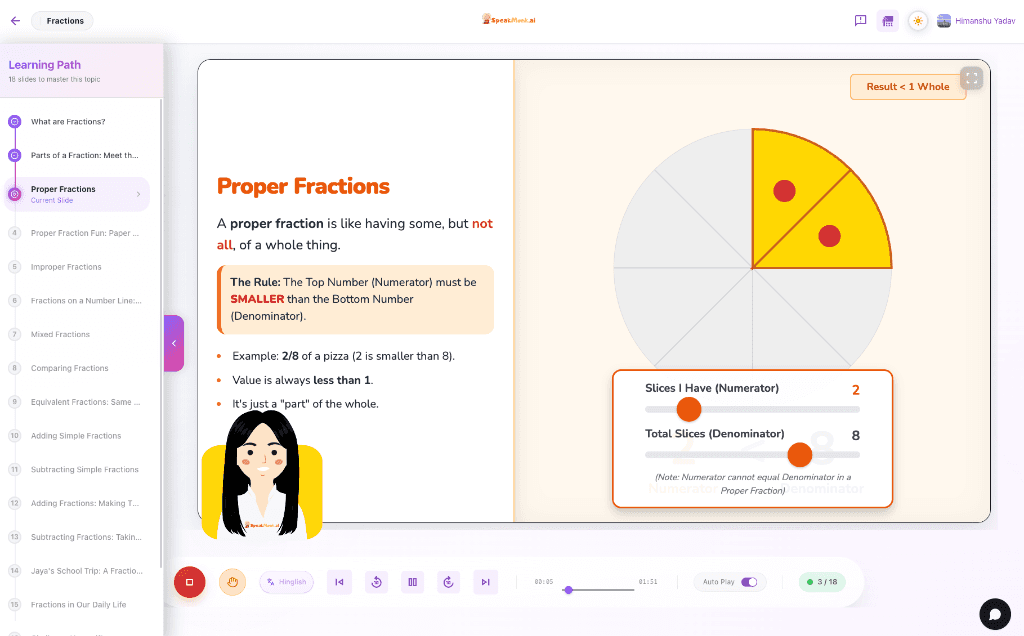
The AI teacher explains one idea at a time while the visuals build on screen. Then it stops and asks the student to explain it back. Doubts get answered in conversation, in English, Hindi or any language the student is comfortable in.
- ✓Waits until the student can explain the idea
- ✓Answers doubts by voice, the moment they come up
- ✓Quiet chat mode for noisy labs or shy students
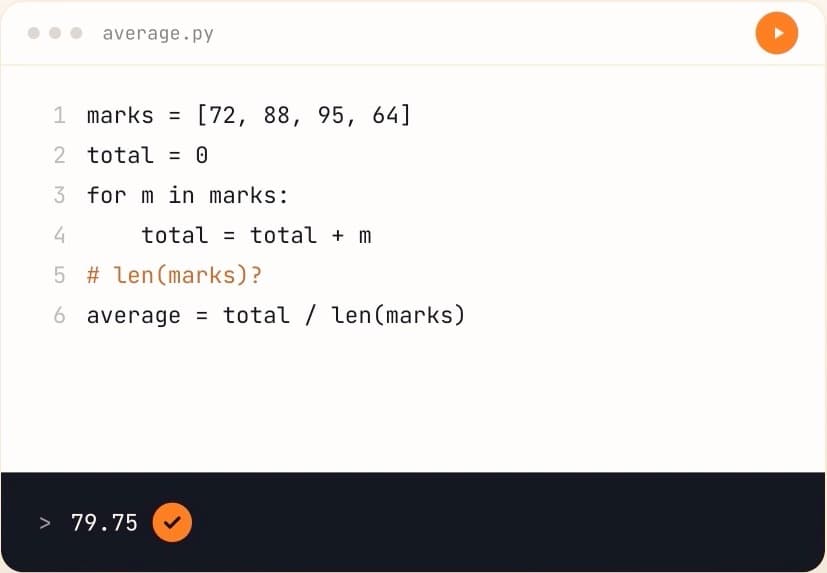
Real Python, with a tutor that won't do it for them.
Students write and run Python in the browser. When they're stuck, the AI tutor leaves a hint inside their own code. It offers a full solution only after they've tried twice, and only if they ask.
- ✓Code runs in the browser, nothing to install
- ✓Hints appear as comments in the student's code
- ✓Challenges built from the chapter they just finished
1marks = [72, 88, 95, 64]2total = 03for m in marks:4 total = total + m5# HINT: how many marks are in the list?6average = total / ...7print(average)
Nice loop! Look at the hint I left on line 5. What should you divide the total by?
Every student programs a robot.
Students program a virtual robot with walls, a distance sensor, line and light sensors, LEDs and a buzzer. When your lab has robot boards, the same code flashes to the real robot over USB.
- ✓A virtual robot for every student from day one
- ✓The same code runs on the real robot board
- ✓No separate toolchain to install
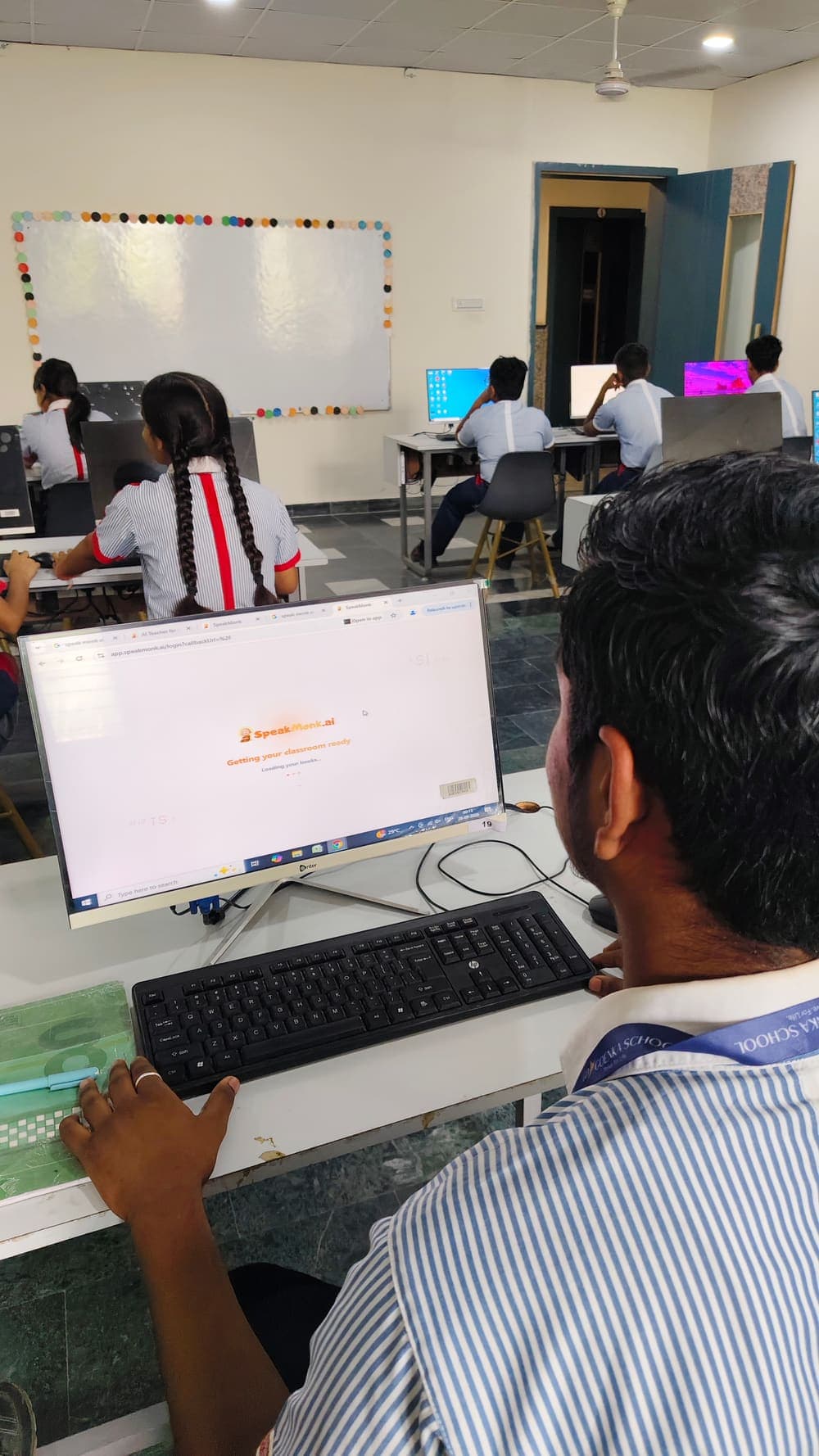
Lab at school. Practice at home.
Everything runs in the browser: lab computers, tablets, or a phone at home. Students pick up where they left off, and nothing needs installing.
A school's existing computer lab, running SpeakMonk.
Need a subject we don't list? We build it for your school.
Tell us the subject, the class and the syllabus. We build the full course: lessons the AI teacher delivers out loud, visuals, practice and Socratic tests. It appears in your school's own catalogue, only for your students.
- 01
Tell us what to teach
The subject, the class, and your syllabus or textbook.
- 02
We build the course
Voice lessons, visuals, practice and Socratic tests.
- 03
Experts review it
Subject experts check every lesson for accuracy.
- 04
It goes live for your school
In your own catalogue, with reports on the teacher dashboard.
We share the timeline in your pilot plan, after the demo call.
Thirty students. One summary.
Students work through the chapter before class. By the time the teacher walks in, the dashboard shows who finished, who didn't, and where the confusion sits, so class time goes to discussion instead of delivery.
Sign-in without email
Students join with a class code, then sign in with their School ID and a PIN. The teacher approves who gets in.
A report per chapter
Each chapter a student finishes becomes a report the teacher can open.
One class summary
Generate a single summary for all thirty instead of reading each report.
Staff and subjects
Add subject teachers to a class, each with their own subjects.
Find out who actually understood.
NEP 2020 asks schools to assess what students can do, not what they memorised. A teacher generates a spoken quiz on any chapter. The student explains the idea aloud for five to ten minutes, and the AI judges whether they can apply it in a real situation, not just repeat the definition.
Spoken, not clicked
The student talks through the idea. There is no option to guess.
Results by topic
See which topics each student understood, half-understood or got wrong, and allow an extra attempt where it helps.
Five to ten minutes
Short enough to run for a whole class without losing a lesson to assessment.
Electricity · Socratic test results
| Closed circuit | Conductors | Bulb filament | |
|---|---|---|---|
| Aarav | Understood | Understood | Partly |
| Diya | Understood | Misconception | Partly |
| Kabir | Partly | Understood | Understood |
| Meher | Understood | Understood | Understood |
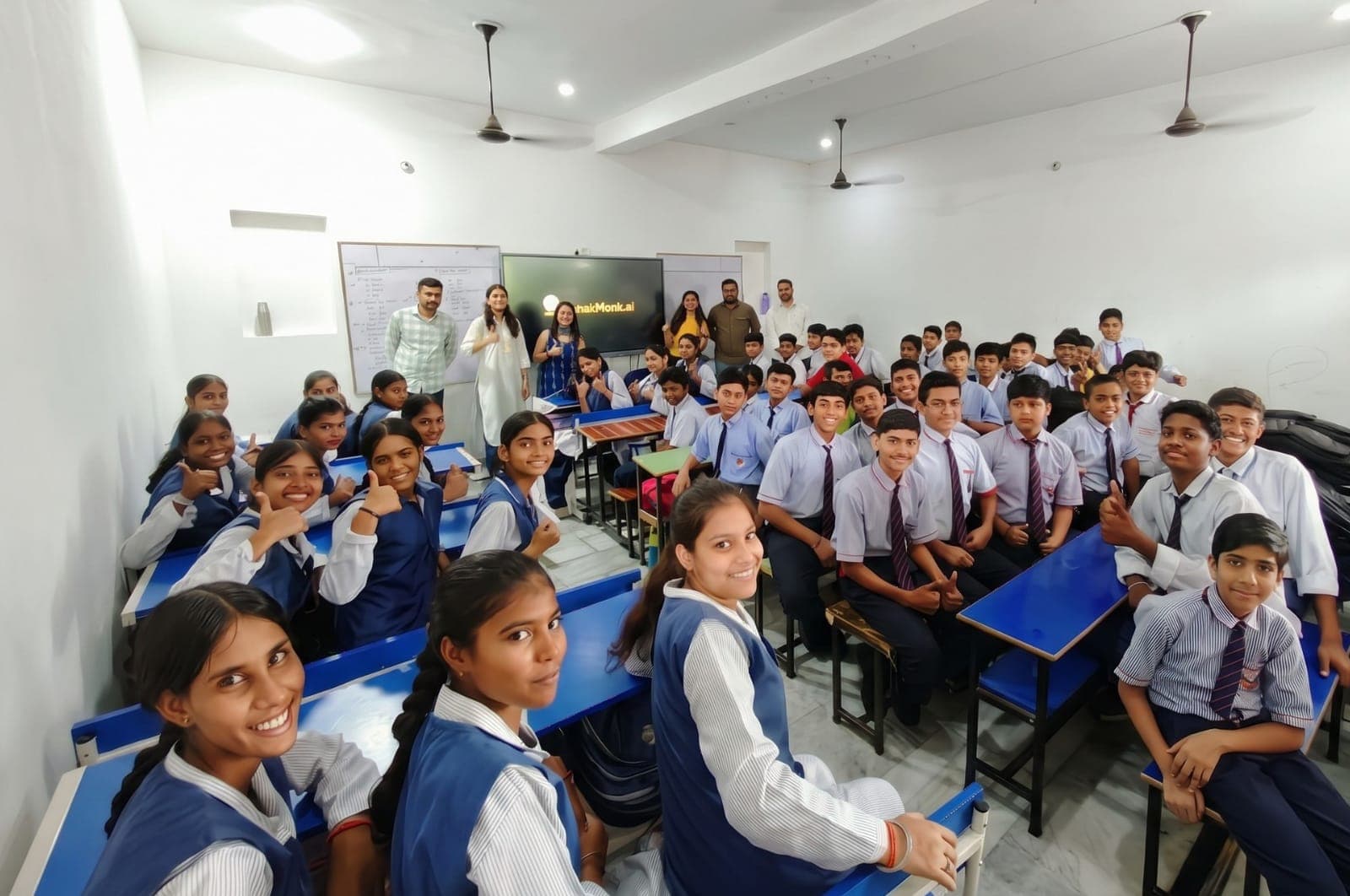
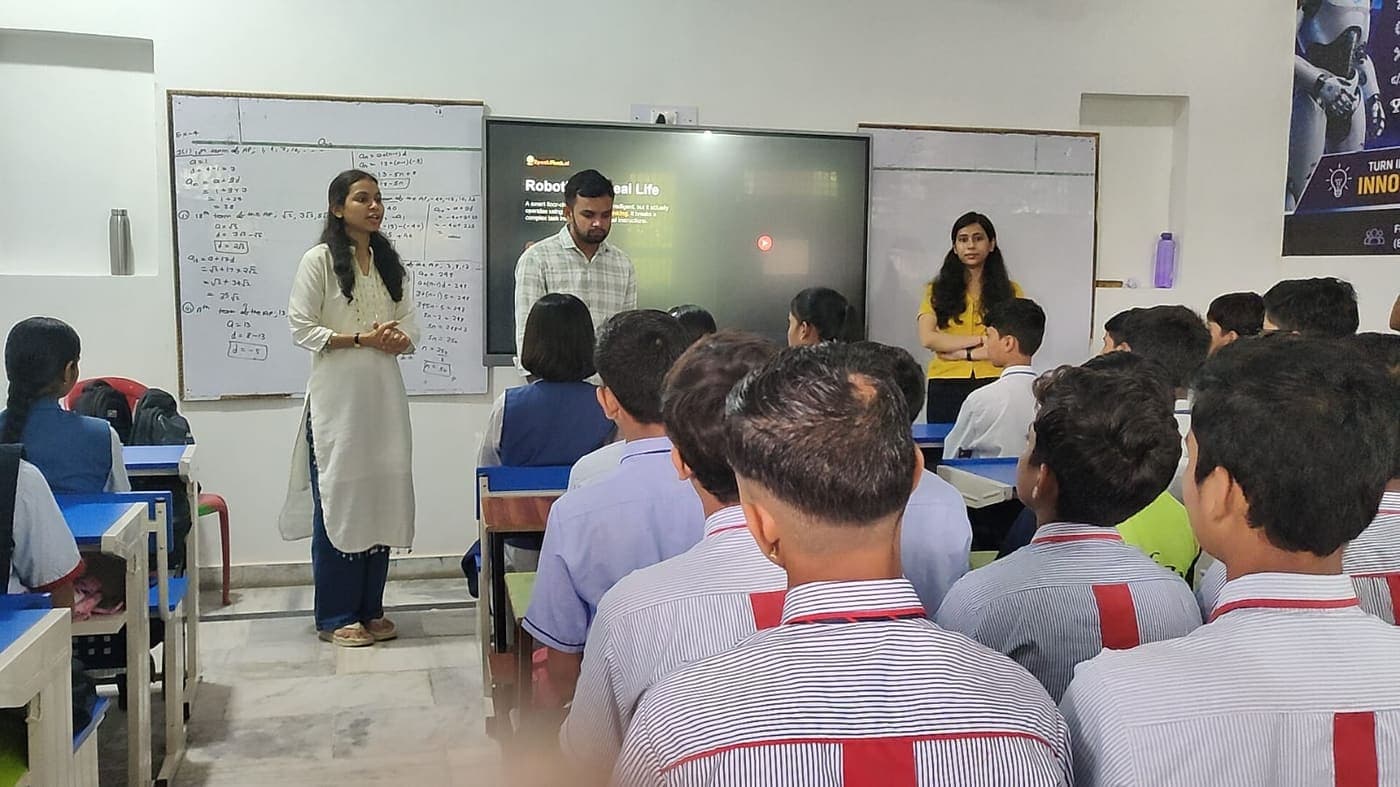
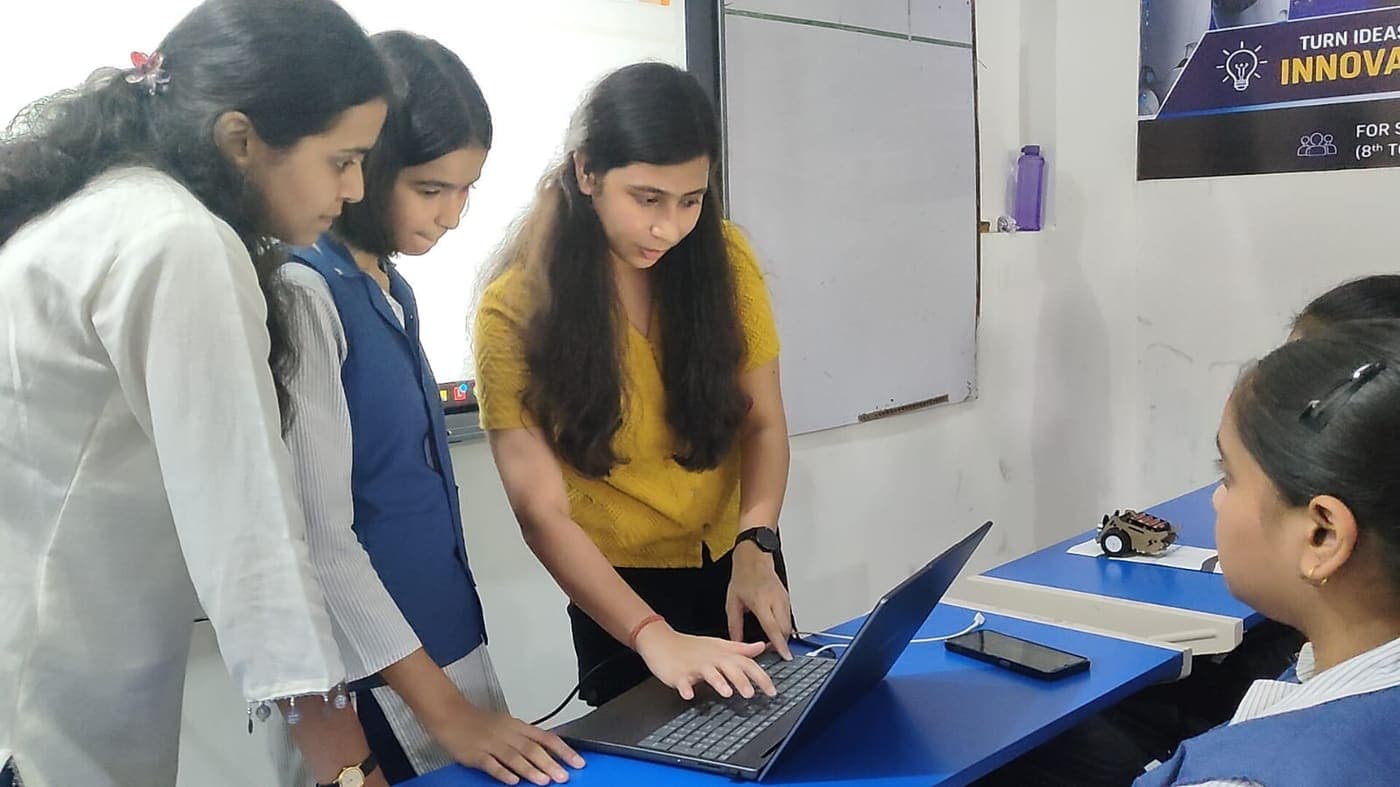
Inside a SpeakMonk session.
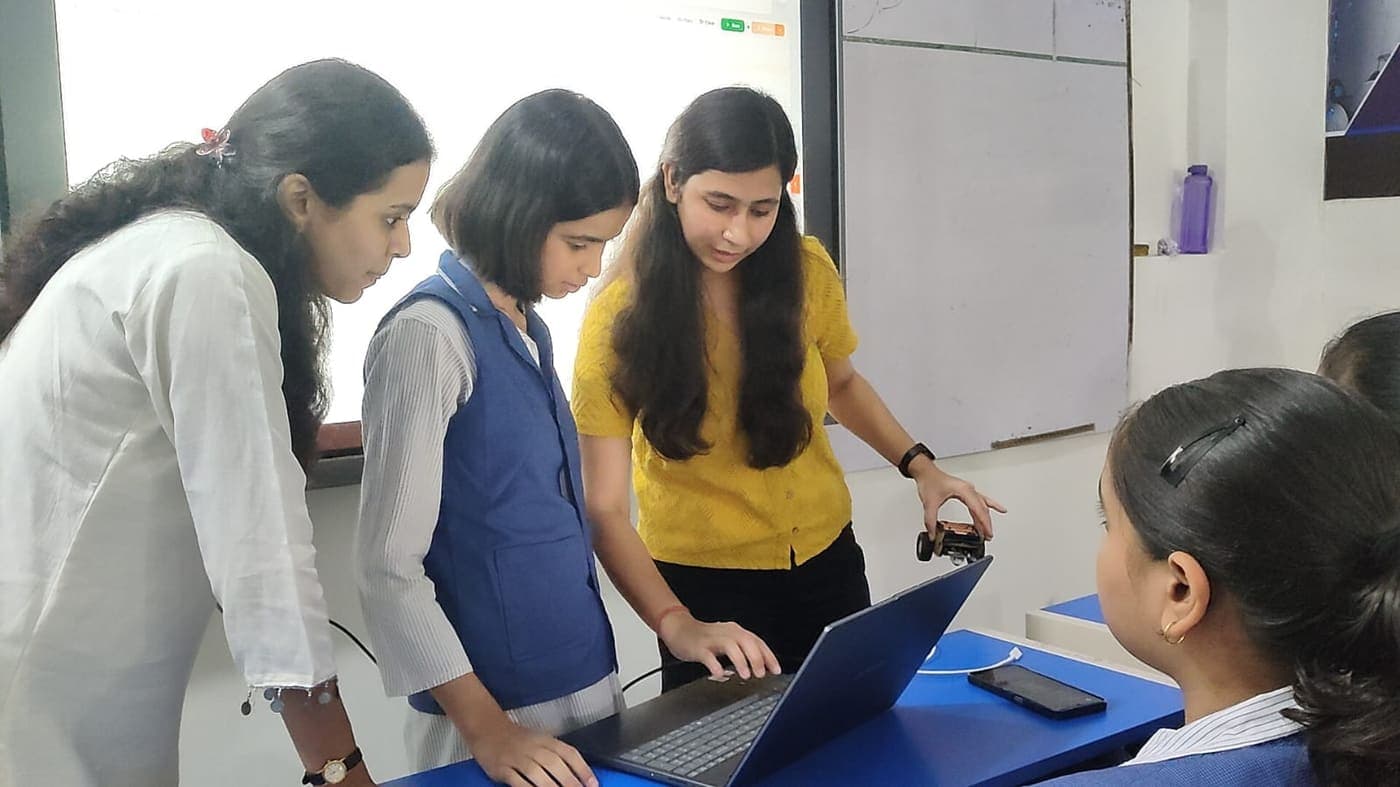
From SpeakMonk workshops in schools: full classes, robotics and hands-on coding.
How it runs in your school
A daily classroom system, not a slide deck. Here's how it fits into a CBSE school day.
Set up
Any browser and internet. Lab computers, tablets or phones. Nothing to install and nothing new for IT to maintain.
In class
Your teacher leads the room. SpeakMonk teaches each student one-on-one, by voice, at their own pace.
Teacher reviews
Every finished chapter becomes a report. Your teacher sees who is stuck and decides what the next class covers.
Rollout
We handle onboarding, teacher training and curriculum mapping, with a clear plan from signing to going live.
Built on research, not guesswork.
Each part of the product follows established findings on how students learn and remember.
Explaining beats picking
Students remember more when they explain an idea in their own words than when they pick it from a list.
Self-explanation effect · Chi et al.
One idea on screen
Extra decoration steals attention. The canvas shows one concept at a time, in sync with the voice.
Cognitive load theory · Mayer, Sweller
Revisit before it fades
Concepts come back at spaced intervals so they move into long-term memory.
Spaced retrieval · Ebbinghaus, Roediger
Apply, don't recite
Students use concepts in real situations, which is where memorised answers fall apart.
Bloom's taxonomy
Questions from school leaders
What principals and directors usually ask before a pilot.
Do we need to hire a specialist AI, coding or robotics teacher?
We already have a coding teacher. Why add SpeakMonk?
What devices does it need?
How does robotics work in class?
Which subjects do you cover for schools?
Can you build a course just for our school?
How do students sign in? They don't have email.
How do teachers see what students have done?
Is the content aligned to CBSE, NEP 2020 and NCF 2023?
How does a school start?
Is the pilot really free?
How much does SpeakMonk cost for a school?
Start with a free lab pilot
We'll call within 1 business day and show a demo on your own syllabus. Then we run a free pilot in your lab. Pricing for your school size comes after the pilot, with no commitment.
- 01
We call you
Within 1 business day, on the number you share.
- 02
Demo on your syllabus
See AI, coding and robotics running as a real class, not a slide deck.
- 03
A free lab pilot
SpeakMonk runs in your lab with your students and teachers. No cost and no commitment.
Prefer email? hello@speakmonk.ai
Prefer WhatsApp? +91 75004 01566